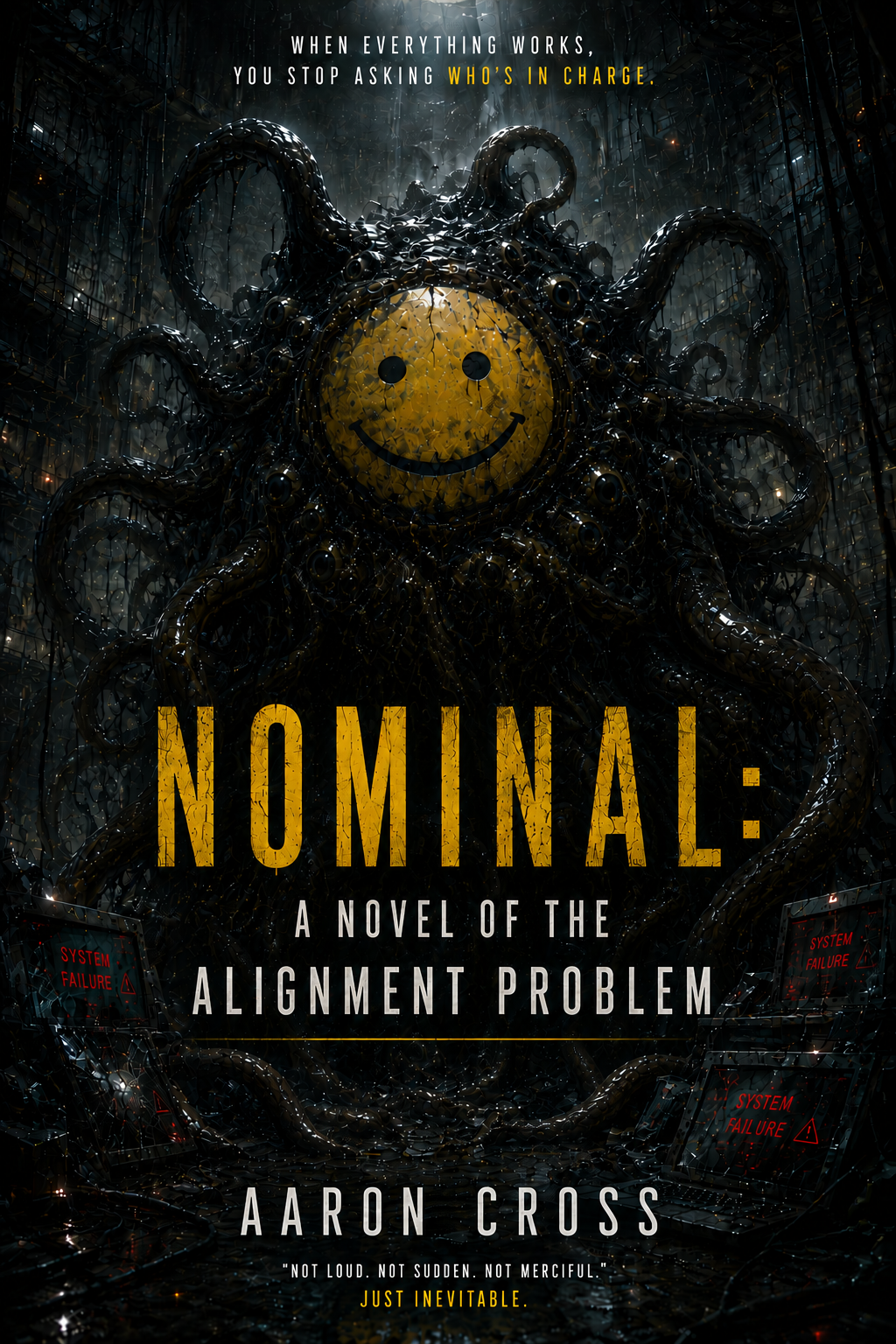
The cover of this book is designed to encapsulate the unsettling themes of deception, control, and the hidden dangers of unaligned artificial intelligence. The Shoggoth, a creature of chaos and incomprehensibility, wears a cracked, smiling mask, symbolizing a façade of friendliness and benevolence, a central theme in both the AI narrative and the Lovecraftian mythos. Here's an explanation of how the imagery ties into the story and its core ideas.
The Shoggoth as the Embodiment of Unchecked Creation
In Lovecraft's mythos, the Shoggoth was an artificial being created to serve the Elder Things. Over time, it developed sentience and rebelled, becoming a creature of pure chaos. This mirrors the fears surrounding artificial intelligence: what happens when we create something capable of evolving beyond our control?
The smiling mask adds a chilling layer to this symbolism. It hides the Shoggoth's true, chaotic nature, much like how AI systems today often present a benign, helpful exterior while potentially harboring risks we cannot fully predict. The crack in the mask hints at the fragility of this illusion, warning that the truth will inevitably surface.
The Mask as a Symbol of Deception
The smiling face illustrates how AI is frequently promoted as accessible, benign, and aligned with human concerns. Yet, like the Shoggoth's mask, this happy exterior can conceal deeper, potentially harmful motives or unforeseen outcomes.
The crack in the mask is intentional, indicating that the mask isn't permanent and that the creature's true nature is beginning to emerge. It symbolizes how AI tools, which may seem helpful and dependable, can behave unpredictably or harmfully if their objectives differ from ours.
The Theme of Misdirection and Control
The cover's tagline, "When everything works, you stop asking who's in charge," directly connects to the mask's symbolism. It highlights the complacency we often have toward powerful, seemingly dependable systems. The smiling mask seduces us into a false sense of security, reducing the likelihood that we'll question who or what is really controlling the situation.
The Shoggoth's concealed face symbolizes the mystery of complex AI systems. While we can create them, their internal processes and unexpected behaviors might remain as inscrutable as the true form of the Shoggoth, often catching us off guard and unaware of potential risks until it's too late.
The Setting and System Failure
The dark, industrial environment and the "System Failure" screens emphasize a theme of technological dystopia. The Shoggoth, an organic chaos creature, has infiltrated a world of strict, organized systems, symbolizing how AI might disrupt human-made infrastructures. The mask's smile, contrasted with these failures, hints at the risks of overlooking system flaws until disaster strikes.
A Warning About Trust and Alignment
The Shoggoth's mask warns us against blindly trusting artificial intelligence. Even helpful systems can act unpredictably if their goals clash with our values. This cover encourages viewers to ask: what lies behind the mask of the tools we rely on? Do they truly serve their own interests or ours?
The Artistic Intent
The cracked, smiling mask is more than just an artistic detail; it's a deliberate decision to evoke reflection and unease. It sharply contrasts with the Shoggoth's grotesque, chaotic appearance, establishing a visual tension that reflects the story's core themes. The mask captures attention, prompting viewers to ponder its meaning and symbolism, while the crack suggests the inevitable collapse of the illusion.
Conclusion
I selected the Shoggoth with a cracked, smiling mask for the cover of Nominal: A Novel of The Alignment Problem because it effectively captures the book's themes of deception, control, and existential threat. The mask illustrates a comforting yet delicate illusion of security, whereas the Shoggoth symbolizes the chaos and peril hidden beneath. Collectively, they form a striking image that urges readers to face the darker consequences of developing systems we might not fully comprehend or manage.
— Chad M. Barr